Tag: demographics
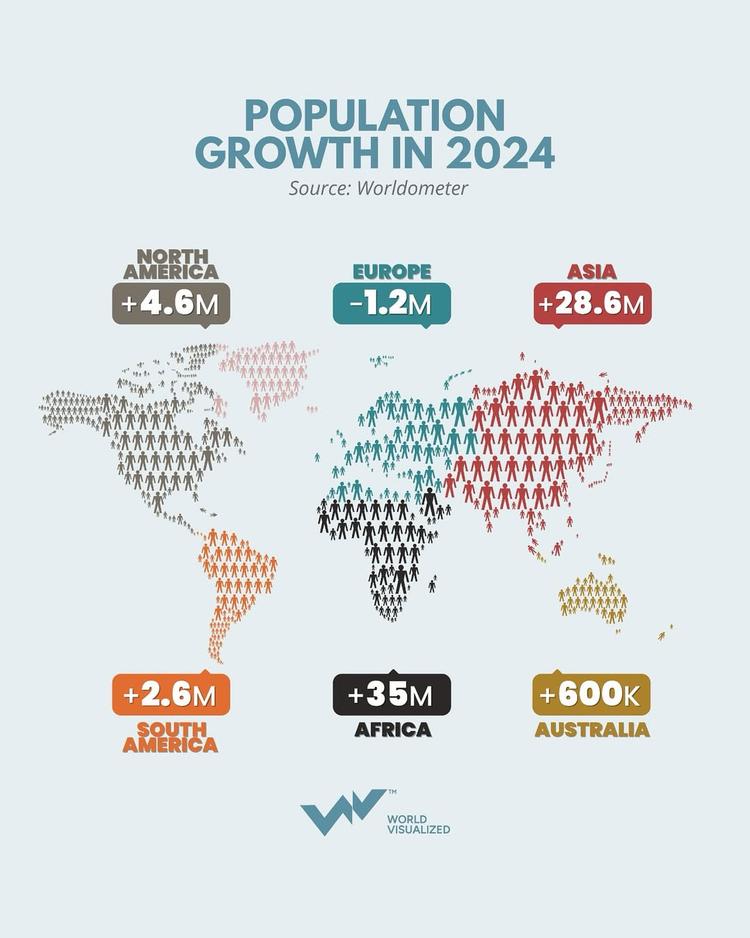
According to data from Worldometer, the global population significantly increased in 2024, reaching approximately 8.16 billion by the end of the year. This represents an increase of about 70.24 million people from the previous year, reflecting a growth rate of 0.87%.

According to the United Nations, global life expectancy at birth has experienced significant changes across various regions. As of 2024, the average life expectancy at birth worldwide is 73.3 years, with females averaging 76.0 years and males 70.7 years.

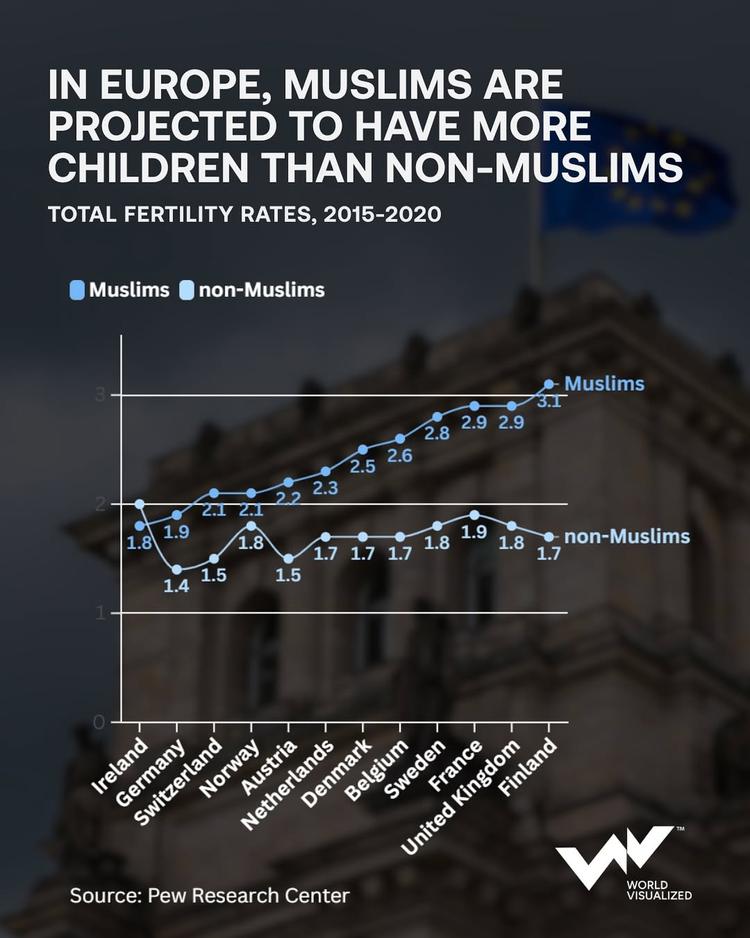
Across Europe, birth rates tell a changing story. According to new findings from the Pew Research Center, Muslim families are having more children on average than non-Muslims, a pattern that is reshaping the region’s population dynamics.
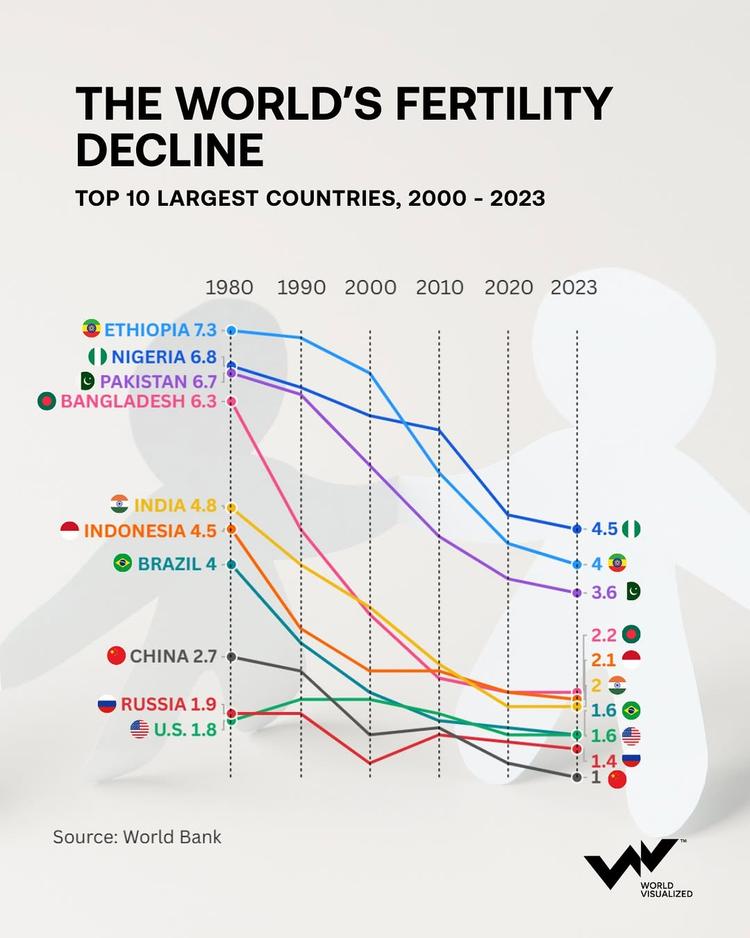
Across much of the world, people are having fewer children than ever before. A new visual from World Visualised, using World Bank data, shows a striking pattern: between 2000 and 2023, fertility rates in the ten largest countries have fallen sharply, and in five of them, they’ve dropped below the replacement level of 2.1 births per woman.


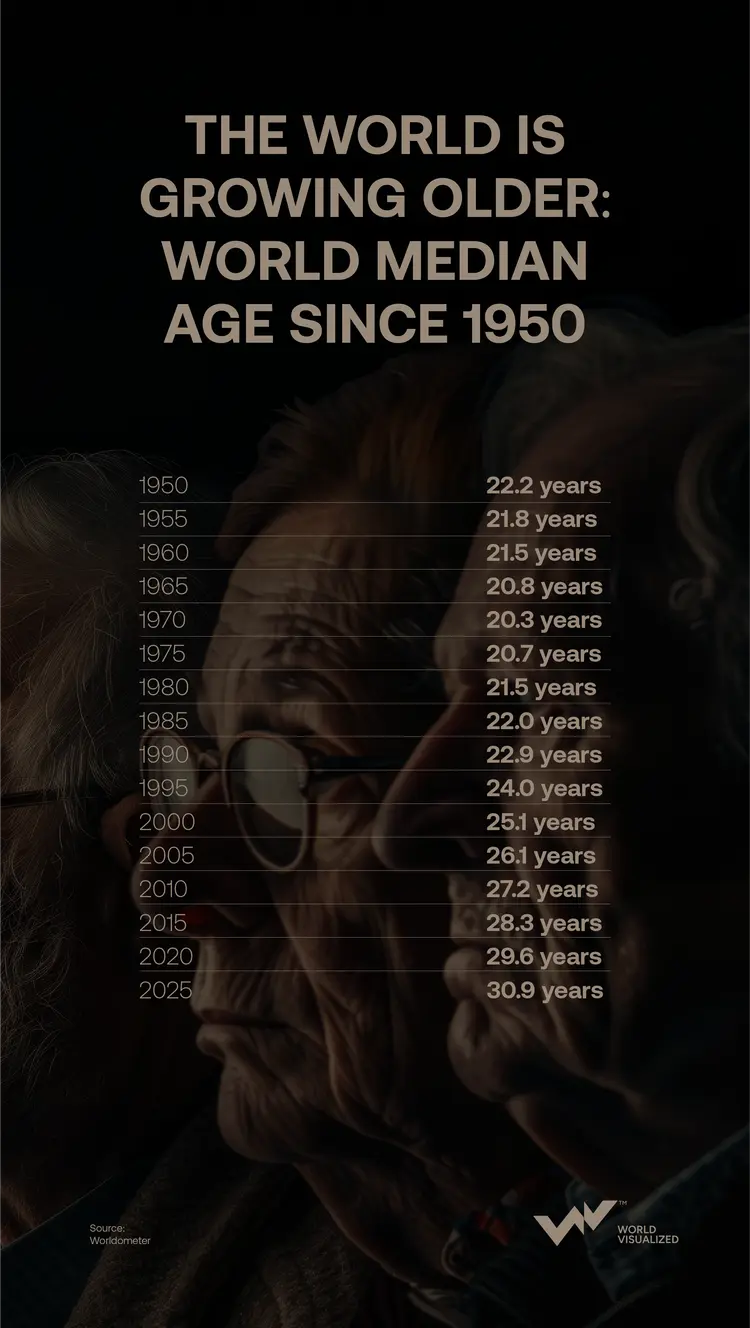
World Visualized’s graphic charting the median age of the global population from 1950 to 2025 shows a steady rise: from around 22 years in 1950 to more than 30 years in 2025. The pattern highlights how advancements in healthcare and education, combined with declining fertility rates, are transforming societies worldwide.
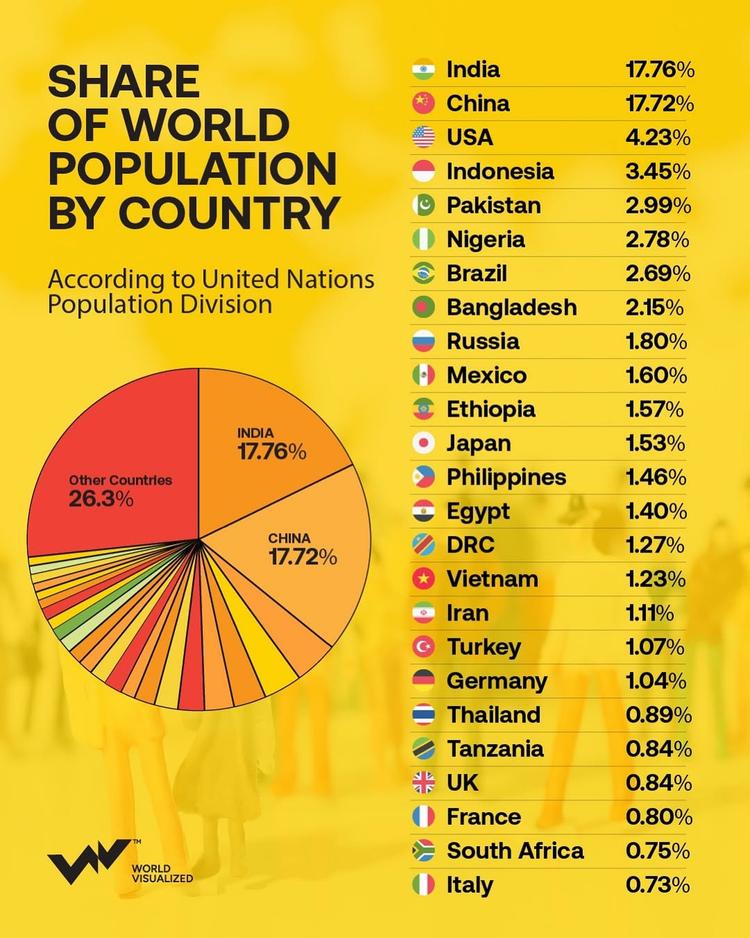
India has officially become the most populous country on Earth, overtaking China with a 17.76% share of the global population, according to Worldometer. China follows closely at 17.72%, while the United States remains a distant third at 4.23%.