
Policing levels vary widely across the world, and the differences say a lot about how governments approach security, control, and public order.
Latest
All from Society & Culture
Most people would assume this isn’t even a question worth asking. Condoms are sold in supermarkets, pharmacies, corner shops and vending machines across much of the world.
Travelling in Asia remains far more affordable than in most other regions, with new figures showing that several countries still offer full travel experiences at remarkably low daily costs.
While much of the world packs away decorations by the end of December, millions of people only just got started. Across parts of Eastern Europe, the Caucasus, Central Asia and Africa, Christmas is celebrated on January 7, not 25 December.
Synthetic wigs rarely make headlines, yet they are becoming one of the clearest signals of how the global beauty trade is shifting. Behind everyday fashion choices sits a tightly connected web of factories, exporters, online marketplaces, and consumers spread across continents.
You have likely encountered a dish from another country or culture and immediately decided you would never try it because it appeared strange or unappealing.
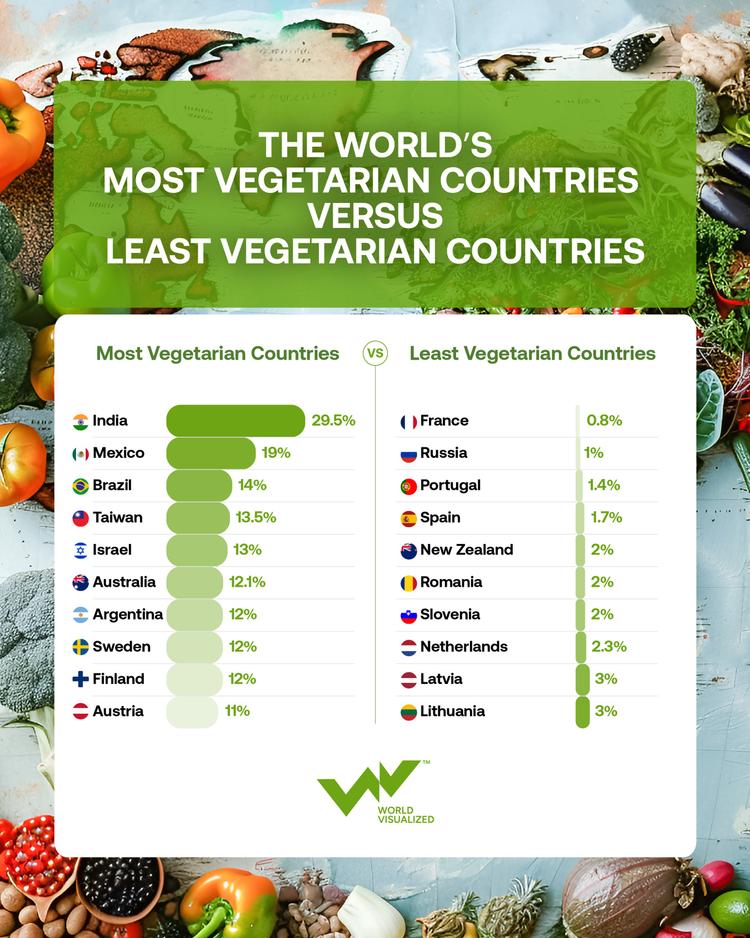
In homes across the world, families are facing the same question every day of how to eat well when food prices keep rising, and life keeps getting busier.
When it comes to fentanyl consumption, Germany leads the world with 16.2%, followed by Spain (12.9%) and the United States (12.7%).
Paid maternity leave is nearly universal worldwide, but a small group of countries still offer no guaranteed paid time off for new mothers, and the United States remains the most surprising member of that list.
A new visual by World Visualized highlights the countries with the highest average testosterone levels, measured in nanograms per deciliter (ng/dl).
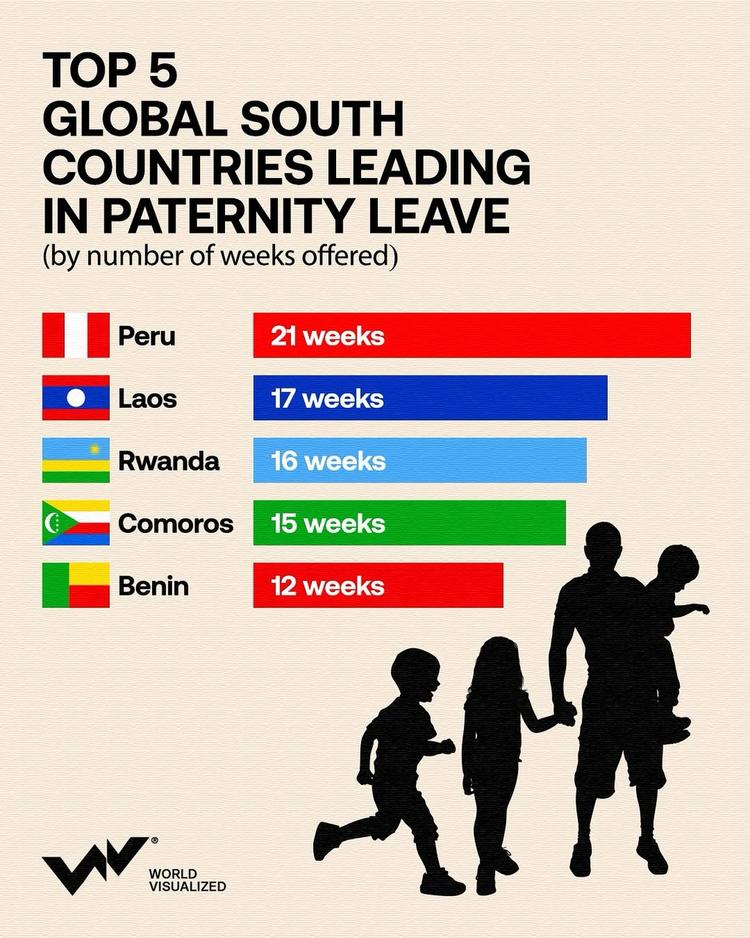
For decades, maternity leave has dominated conversations about family policy. But today, a quiet revolution is taking place, especially across the Global South.
At least four nations — India, Pakistan, Bangladesh, and Indonesia — have experienced massive power blackouts that affected tens or hundreds of millions of people. These events left more than just empty streets and dark homes; they also revealed the pressure points in infrastructure, governance, and daily life.
The United States leads the world in civilian gun ownership, with an average of 120.5 firearms for every 100 residents. That far exceeds the next country on the list, Yemen, with 52.8 guns per 100 people, followed by New Caledonia at 42.5.
New York City’s skyline has long stood as a symbol of ambition, resilience, and architectural excellence. Rising above the dense grid of Manhattan, its towers tell stories of innovation and endurance.