"I love my food spicy" is a common phrase around the world, and there are different types of peppers that could help satisfy this desire.
Latest
All from Environment
The world’s oil wealth is highly concentrated as a relatively small group of countries controls the majority of known crude resources, shaping energy markets, geopolitics and long-term economic planning far beyond their borders.
At the beginning of 2026, Yemen’s war entered a more complicated phase as friction grew between the internationally recognised government and the Southern Transitional Council, which widened its reach across several southern areas.
In some regions, unresolved conflicts are solidifying into prolonged humanitarian emergencies, while in others, long-standing tensions are at risk of flaring up again under political pressure or regional strain.
Luxury travel is no longer defined only by breathtaking beaches or historic landmarks but increasingly measured by how many five-star hotels a city can sustain.
Many people touch aluminium every single day: when opening a can, cooking with foil, driving a car or even plugging in a laptop. But few realise the huge amount of energy required to produce it.
Cotton is one of the world’s most familiar materials, worn daily and found in everything from shirts to bed sheets. But behind this comfort lies a high environmental cost, as producing just 1 kilogram of cotton requires about 10,000 litres of water.
Recent statistics reveal that the world is generating waste at an alarming rate, with around 460 million tonnes of plastic waste annually by 2025.
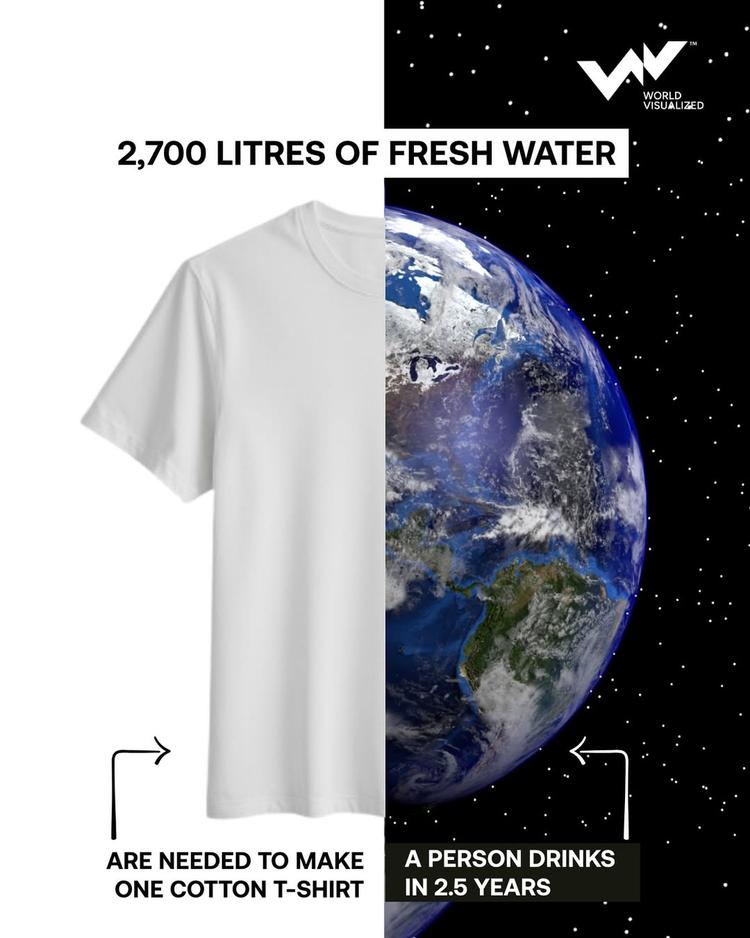
When you pick up a simple cotton T-shirt, you probably don’t think about water. But behind that soft, everyday fabric is surprisingly 2,700 litres of fresh water.
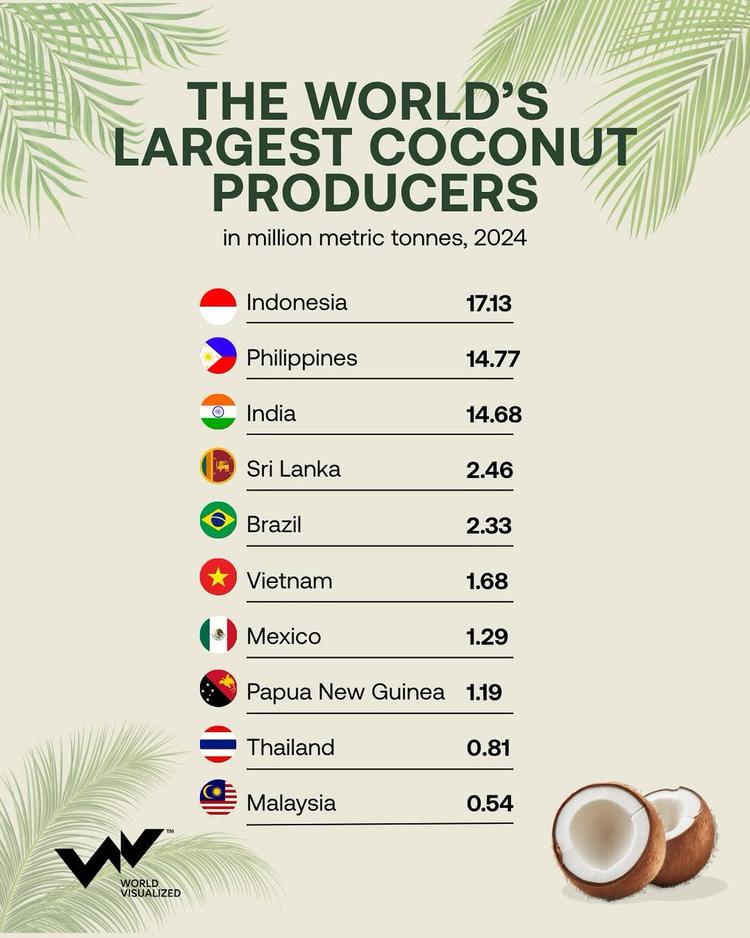
Coconut may not grab headlines like crude oil or wheat, but the latest data shows it commands a power of its own, especially in tropical regions where it’s not just a crop, but a way of life.
Artificial intelligence may feel weightless in the sense that, in just a few clicks and an image appears, but the energy behind it tells a different story.
Over the past decade, global demand for freshwater has surged, rising from an estimated 141 billion cubic meters in 2015 to 170 billion cubic meters in 2025, according to the visual data. At the same time, land use for resource production has expanded slightly, from 38 million hectares to 41 million hectares.
Air pollution remains one of the world’s most pressing environmental and health threats. The latest IQAir 2024 World Air Quality Report paints a troubling picture, showing that millions of people still breathe air far above safe health limits.
While wealthy nations are pouring billions into solar, wind, and green hydrogen, many less industrialised countries already generate the majority of their electricity from renewable sources.