Tag: economy
The International Monetary Fund (IMF) is forecasting a notable reshuffle in global economic growth for 2026, with emerging markets driving much of the world’s expansion.
Nigeria, Africa’s most populous nation, is now giving birth to more babies each year than all of Europe plus Russia combined, a milestone that reflects profound global demographic change.
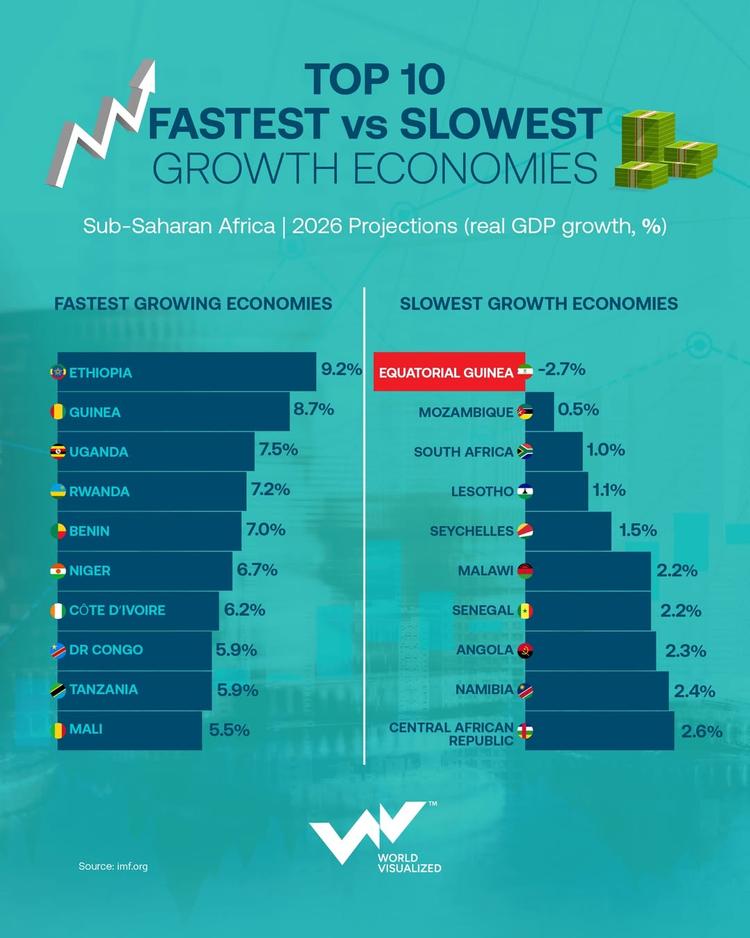
New projections made about Africa’s economic story in 2026 are based on nominal GDP estimates that place a familiar group of countries at the top, but the deeper story lies in why these economies are leading and what it signals about Africa’s future growth path.
Global fast-food brands usually come to mind when people think of mass food provision, but new data shared in policy and food security discussions around Davos and the World Economic Forum tells a very different story.
The global economic recovery is set to remain uneven in 2026, with emerging economies driving growth while much of the developed world continues to slow.
Iran is facing one of its most significant waves of unrest in years, with protests spreading across dozens of cities and provinces since December 2025.
A new ranking of the top 10 supermarket chains in Southeast Asia, based on store count and country presence, highlights how retail dominance in the region is built less on megastores and more on sheer density, convenience and localisation.
Islamic finance is growing faster than ever, and new figures show a surprising leader at the top. According to Global Finance Magazine, Sudan holds the largest volume of assets in Islamic banks worldwide, an estimated $484 billion, placing it ahead of Saudi Arabia, the UAE, Qatar and Kuwait.
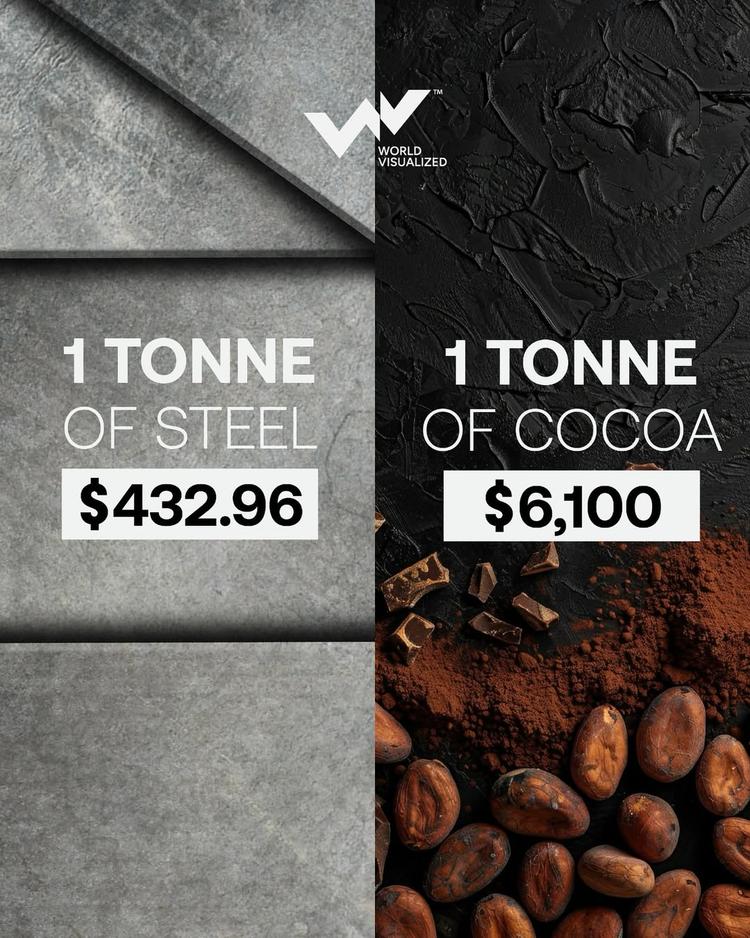
In today’s global economy, one tonne of cocoa and one tonne of steel capture two very different kinds of value. The price of a tonne of cocoa is shown at around US$6,100, whereas a tonne of steel is marked at US$432.96.
For the Fortune-500 giants that dominate revenue charts, McKesson leads the traditional field with more than US $8 million per employee, while companies such as Alphabet Inc. and Apple Inc. hover around US $1.9 million and US $2.4 million, respectively.
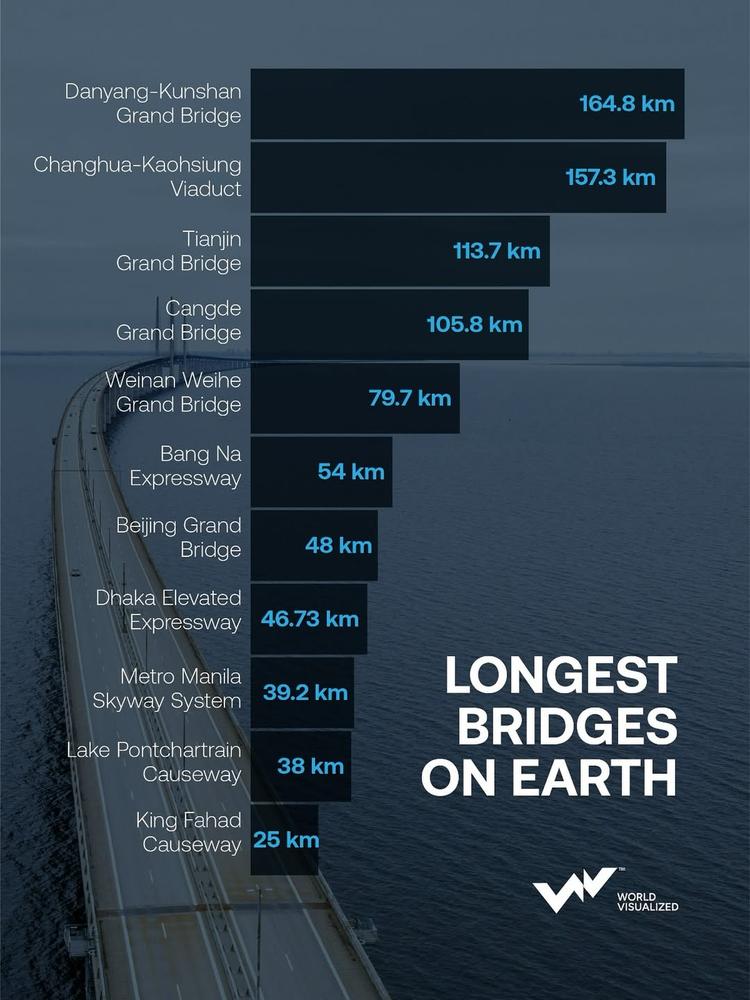
Bridges are more than just concrete and steel, as they are symbols of connection, ambition, and progress. Around the world, engineers have pushed the limits of design to link islands, cities, and entire economies.
Gold has taken centre stage in 2025, with prices climbing by nearly 60 % so far this year to trade around US $4,250 per ounce, according to Trading Economics data.
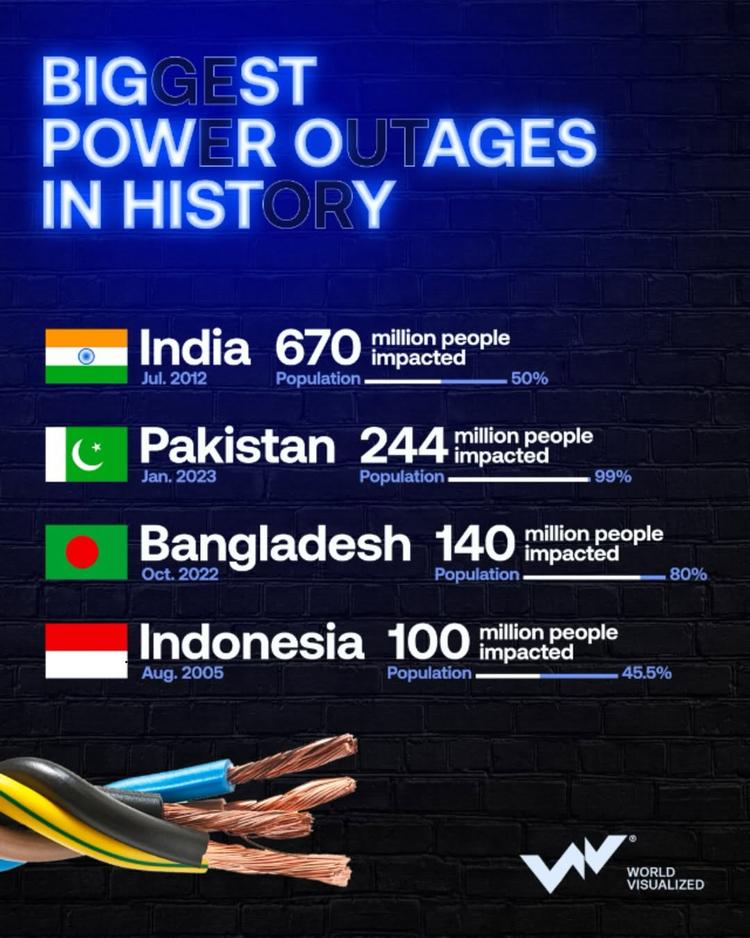
At least four nations — India, Pakistan, Bangladesh, and Indonesia — have experienced massive power blackouts that affected tens or hundreds of millions of people. These events left more than just empty streets and dark homes; they also revealed the pressure points in infrastructure, governance, and daily life.
Across much of the world, people are having fewer children than ever before. A new visual from World Visualised, using World Bank data, shows a striking pattern: between 2000 and 2023, fertility rates in the ten largest countries have fallen sharply, and in five of them, they’ve dropped below the replacement level of 2.1 births per woman.
Europe is widely seen as a basin of prosperity, with advanced economies, generous welfare systems, and high standards of living. Yet, in many European nations, nearly a third of the population faces poverty.
Turkey has long been seen as a country at the crossroads of continents, faiths, and trade routes, and a new Country Similarity Index shows just how unique yet interconnected it is.
Brazil is often celebrated as a country like no other, as the land of samba, football, lush rainforests, and a unique Portuguese-speaking identity in a Spanish-speaking continent.
Venezuela leads the world in proven oil reserves in 2025 with an astonishing 303 billion barrels, followed closely by Saudi Arabia at 267 billion barrels, with Iran securing third place at 209 billion barrels.
China recorded a monthly trade surplus of $103.22 billion in May 2025, according to data supported by market figures from Trading Economics. This figure not only cements China’s dominant position in global exports but also highlights growing disparities in international trade balances.
The United States recorded a total trade volume of $2.61 trillion in the first quarter of 2025. This total comprises $1.89 trillion in imports and $729.1 billion in exports, marking a 6% growth in imports and a 2% rise in exports compared to the same period in 2024.